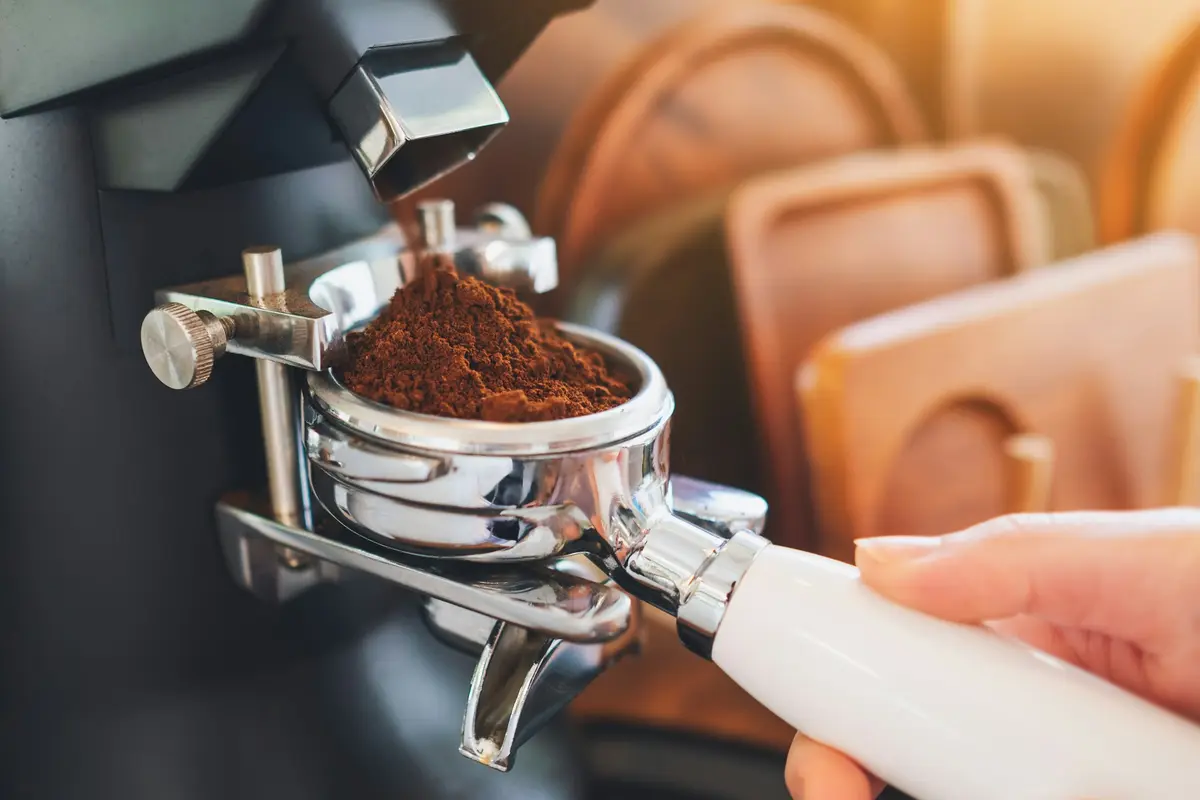
A blade grinder is a small blender: a spinning blade smashes beans until you let go of the button. A burr grinder feeds beans between two cutting surfaces set a precise distance apart, so nothing leaves until it is the right size. That difference in mechanism is the whole story.
What you taste
Blade grinders produce a mix of powder and large chunks. In hot water the powder over-extracts and turns bitter while the chunks under-extract and stay sour, and you get both flavours in the same cup. Burr-ground coffee extracts evenly, so sweetness and the coffee’s own character come through.
Side by side
| Blade grinder | Burr grinder | |
|---|---|---|
| Particle size | Random | Consistent |
| Adjustable | Only by grinding longer | Stepped or stepless settings |
| Heat | Warms the coffee | Minimal |
| Suitable for espresso | No | Yes, with a fine-adjust model |
| Price | Lowest | From modest to very high |
Conical or flat burrs
Home grinders mostly use conical burrs, which are quiet, forgiving and inexpensive to make well. Flat burrs appear on pricier machines and are prized for clarity in light roasts. At beginner and mid-range budgets, the quality of the grinder matters far more than the shape of the burr.
When a blade grinder is fine
If you brew French press or cold brew with dark roasts and add milk, a blade grinder is acceptable, and it is still better than stale pre-ground coffee. Pulse it in short bursts and shake between pulses. For anything else, an entry-level burr grinder is the best money you will spend on coffee.