Everything you need to brew café-quality pour-over at home: the best drippers, a gooseneck kettle and a scale, with a starter kit for every budget.
By the Kettle & Crema team · Updated November 16, 2026 · How we research
Kettle & Crema is reader-supported. As an Amazon Associate we earn from qualifying purchases, at no extra cost to you. How this works.
Pour-over is the least expensive way to make truly excellent coffee at home. A dripper costs less than a bag of good beans, there is nothing to descale or break, and the method shows off the fruit and floral flavours that other brewers mute.
You need three things besides coffee and a grinder: a dripper, a kettle you can pour slowly from, and a scale. Below are the ones we recommend, and a brewer for people who want the result without learning a pouring technique.
The dripper that most speciality cafés use, and it costs less than two flat whites. Its single large hole and spiral ribs let you control the brew with your pour, which rewards practice with bright, clear, tea-like coffee. Start with the plastic version if you want the cheapest and most heat-stable option; ceramic if you want it to look good on a shelf.
The forgiving pour-over. A flat bed and three small holes slow the water down and even out the extraction, so a slightly wobbly pour still gives a balanced cup. If the V60 sounds like too much homework, start here.
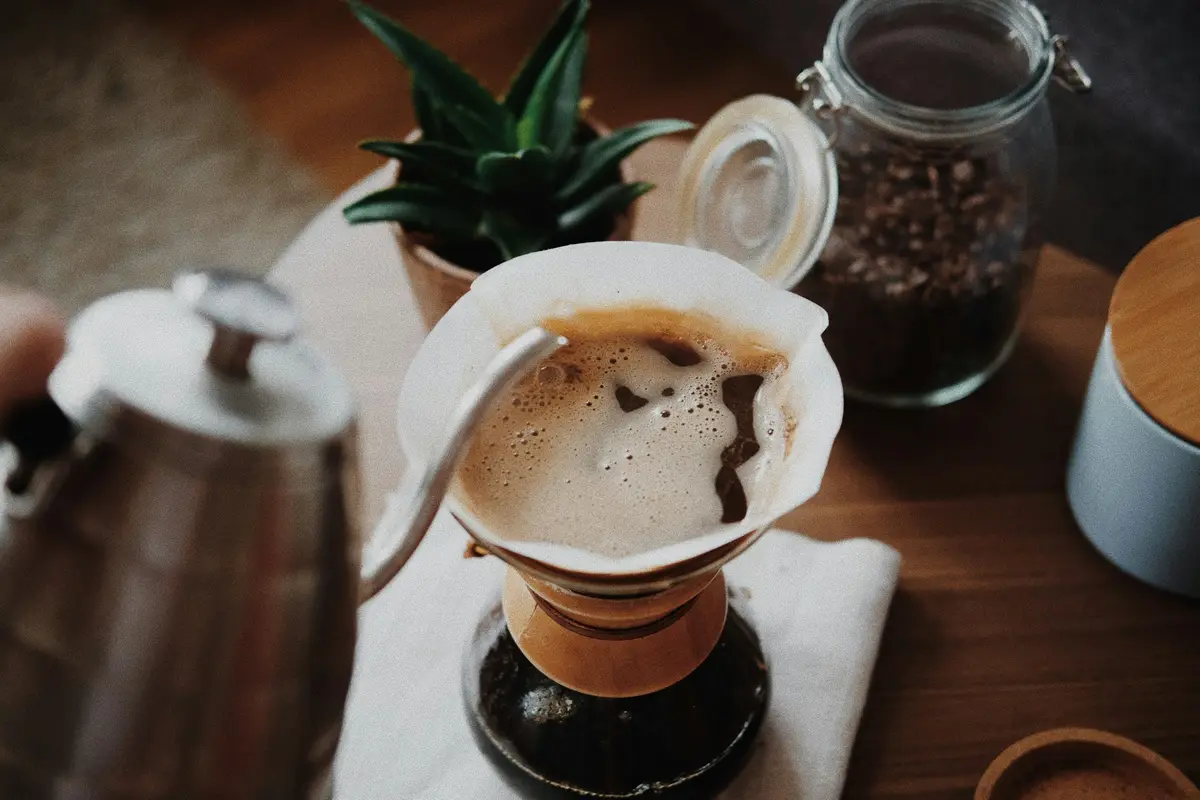
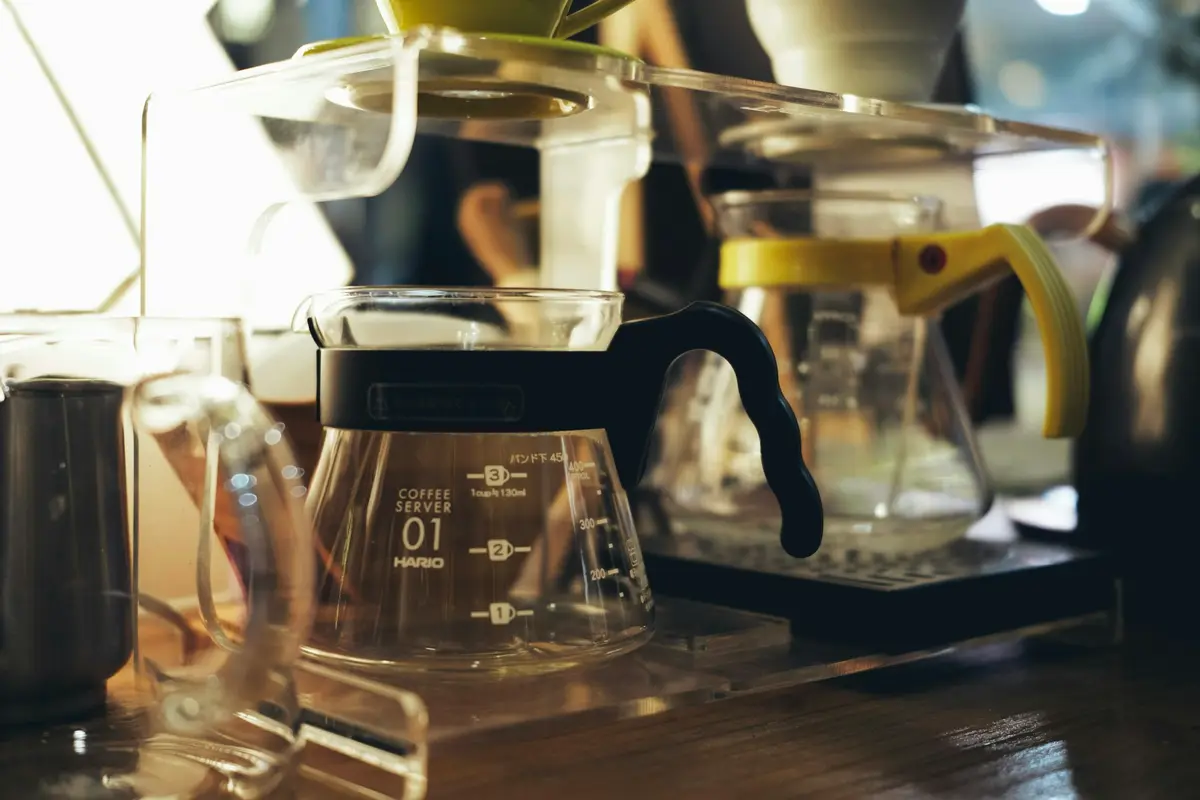
Brewer and serving carafe in one piece of glass, unchanged since 1941 and in the permanent collection of the Museum of Modern Art. The thick bonded paper filters strip out oils and fines for an exceptionally clean cup. It is the pour-over to buy when you regularly make coffee for two to four people.
The kettle that made pour-over equipment desirable. You set the temperature to the degree, it holds it for up to an hour, and the counterbalanced handle and narrow spout give you a slow, precise stream. It is a luxury, and the single most popular upgrade in pour-over.
A scale is the cheapest way to make coffee taste the same tomorrow as it did today. This one reads to 0.1 g, has a built-in timer, charges by USB-C and responds fast enough for espresso as well as pour-over. It does what scales at four times the price do.
Not a pour-over, but the brewer we would hand to anyone who wants great coffee with no kettle skills at all. Coffee and water steep together, then you press them through a paper filter in about a minute. It is close to unbreakable, cleans in ten seconds and goes in a rucksack.
Cone drippers such as the V60 drain quickly and respond to how you pour, which gives bright, clear coffee and rewards practice. Flat-bottom drippers such as the Kalita Wave restrict the flow and even out mistakes. Neither is better. One asks more of you.
Why a gooseneck kettle matters
A normal kettle dumps water and churns the coffee bed. A gooseneck lets you pour a thin, steady stream exactly where you want it. Temperature control is a bonus: lighter roasts taste best brewed near boiling, darker roasts a few degrees cooler.
Weigh, do not scoop
A scoop of dark roast and a scoop of light roast can differ in weight by a quarter. Weighing coffee and water is the only way to repeat a cup you liked. Start at 15 g of coffee to 250 g of water and adjust from there.
Filters are part of the recipe
Each dripper is designed around its own paper. Thicker papers give a cleaner, lighter cup, thinner ones more body. Rinse the paper with hot water before brewing to remove any papery taste and warm the dripper.
Frequently asked questions
What is the easiest pour-over for a beginner?
A flat-bottom dripper like the Kalita Wave, or an AeroPress if you want to skip pouring technique altogether. Both give good results from the first attempt.
Do I need a special kettle?
You can start with any kettle, pouring as gently as you can. A gooseneck becomes worthwhile quickly, especially for the V60, because control over the pour is the whole method.
What grind size should I use for pour-over?
Medium to medium-fine, roughly like table salt. If the coffee tastes sour and thin, grind finer. If it is bitter and the brew takes more than about four minutes, grind coarser.
How much coffee do I use?
A ratio of about 1 g of coffee to 16 g of water suits most people: 15 g to 250 g for a mug, 30 g to 500 g for two.